



How Japanese Talent Agencies Work: Image, Contracts, and Privacy
A Japanese talent agency helps performers build and sustain their careers. Its work may range from training and arranging appearances to publicity and managing a public image. Contracts define that working relationship. Privacy concerns the life that remains beyond it.
For an audience, the relationship is easier to see from the other end: a face on a screen, a performance on a stage, or a photograph in a magazine. Each is a moment of visibility. Following how that moment reaches us reveals a part of Japanese entertainment culture that the finished image leaves out.
Before the Appearance Reaches You
The performance is the part an audience can watch. Making room for it is another kind of work. Someone has to connect an opportunity with a performer, agree on the work, and make the dates possible. Training looks further ahead, toward what a person might be ready to do next.
The Japan Fair Trade Commission’s 2024 study describes agencies negotiating with broadcasters and producers, managing schedules, and developing careers. Lessons and promotion belong to that wider picture. An agency may help cultivate the ability an audience eventually sees, as well as arrange the chance to see it.
The practical demands become clearer in staff accounts on a major agency’s 2027 recruitment website. One describes completing a month of domestic and overseas touring with recording sessions in between. Another mentions managing live schedules and negotiating budgets. These are accounts from one company, but the detail brings the work into focus: A concert and a recording may be separate experiences for fans, while the people arranging them must fit both into the same stretch of time.

That changes the meaning of a polished appearance. Preparation includes the performance itself and the conditions that allow it to happen. A few minutes in front of an audience may be the visible meeting point of many people’s work.
When a Familiar Face Becomes a Public Image
Getting someone in front of an audience is only part of the story. There is also the question of what the audience comes to know them for. A performance offers one impression. Publicity gives it a wider setting and a route to people who have not yet encountered the work.
One large talent group’s English company profile places the management of actors and models alongside film and television production. Its group businesses also cover music releases, live concerts, photobooks, and merchandise. The breadth is revealing. Within that group, there are several ways to turn an appearance into something an audience can watch, read, hear, or keep.
A film and a photobook invite attention in different ways. One lets us follow a performance through a story; the other gives photographs time and space on the page. In image management, these choices of medium and presentation matter. They shape which part of a performer’s work reaches us and how we remember it.
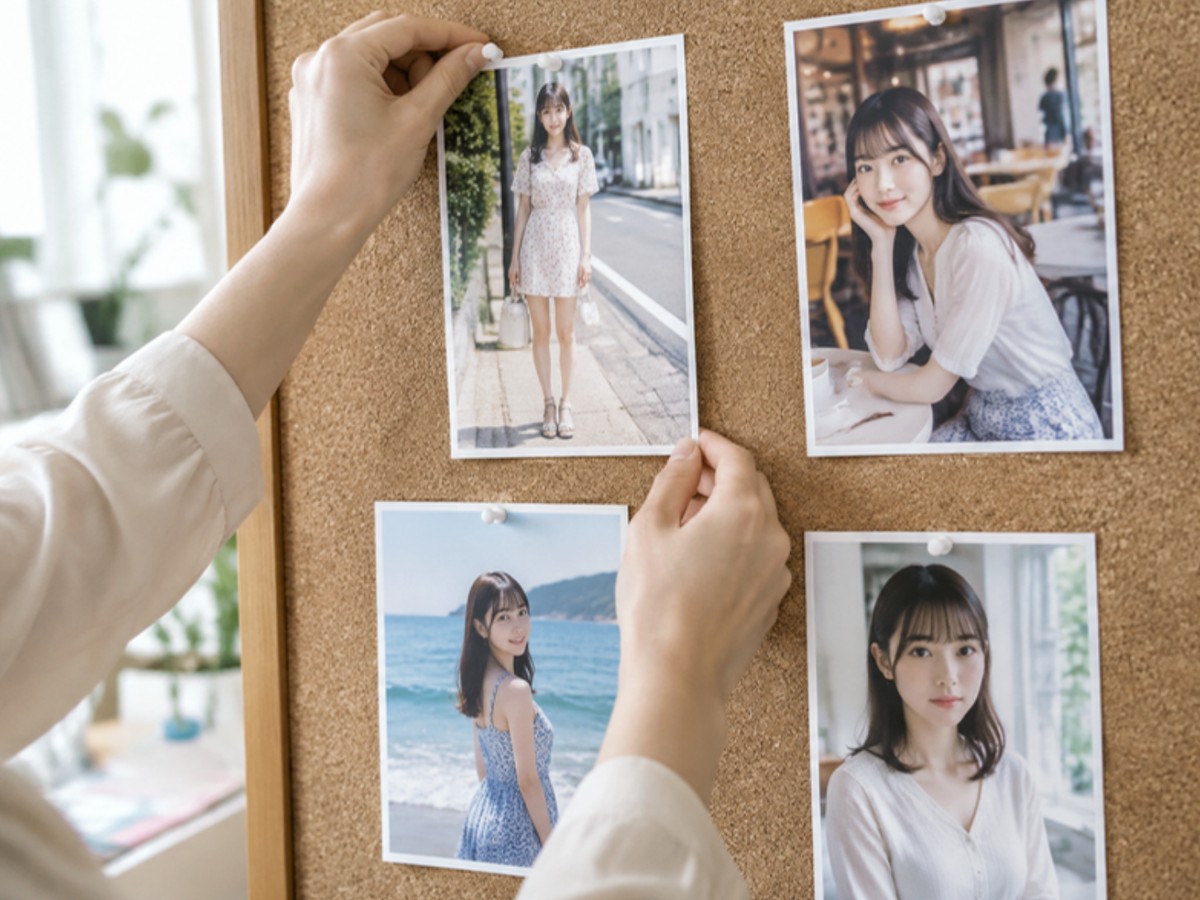
Publicity may carry that impression beyond the original appearance. The recruitment website with the touring accounts offers another glimpse: Someone working in fan services describes involvement in events, merchandise, and filming content. The relationship with an audience also continues through things made around the performance.
Seen this way, a public image has several contributors: the person’s work, the setting in which it appears, and the ways it is introduced afterward. It is a view of a person shaped for an audience. Even a warm, familiar public presence leaves much of the person outside the frame.
The Agreement Behind the Support
As support becomes more extensive, the relationship needs terms. Training takes time. Arranging and promoting work involves commitments. The contract gives that cooperation a defined scope, including how the performer is paid and how long the arrangement lasts.
In the common exclusive management model described in the Fair Trade Commission’s study, an agency provides support and receives fees from clients, then pays the performer. The performer enters into an exclusive relationship with that agency. Actual terms vary; the study also describes more limited agency arrangements focused on obtaining work and negotiating conditions.
For anyone trying to understand the industry from the audience side, that variety matters. The word “agency” does not tell us what is in someone’s agreement. A public career title gives us even less reason to infer private contract terms.
Japan’s Cabinet Secretariat and Fair Trade Commission address this balance in their guidance on fair dealings with performers. Agencies should put terms in writing and explain important provisions, including pay, rights, and restrictions on activities. Performers should have time to consider the agreement and seek advice. Contract periods involving exclusivity should be explained to and discussed with the performer.
The significance goes beyond paperwork. A system that helps someone develop a career also needs room for that person’s understanding and choices. Recognizing the work an agency contributes and respecting the performer as a participant in the relationship go together.
A Public Career Still Has a Private Life
The boundary becomes especially clear when attention moves away from the work. In a statement dated July 7, 2021, a major Japanese agency asked news organizations to stop intruding into the lives of artists’ families. It described relatives being followed and photographed, and objected to the publication of their images without permission, even when faces were blurred.
The statement is striking because the people at its center had never chosen a place on the public stage. Their connection to an artist had made them objects of attention. The agency was using its public voice to defend their ability to live outside that attention.
This is one concrete example of how private life is protected in Japan’s entertainment world. The same statement acknowledged that intrusive behavior had continued. Protection here is an active effort to maintain a boundary, not a guarantee that everyone in Japan enjoys it.
It also makes privacy easier to distinguish from image management. Promoting a work helps it reach an audience. Protecting family life limits how far that attention should travel. An agency may be involved in both, with very different purposes.
A performer can offer something meaningful in public without making every relationship and every part of daily life public as well. Once that distinction is visible, the space around a public image begins to look less like missing information and more like a life with its own boundaries.
What We Introduce at Aoyama Princess
The distinction between a public role and a whole life also matters in how we introduce people at Aoyama Princess. Women with careers in the spotlight, including models, idols, talents, and AV actresses, are among our companions. We introduce their professional backgrounds through career descriptions while keeping their entertainment stage names private. The reasons for withholding those names vary from woman to woman.
A career description may give you a sense of someone’s professional background while leaving her connection to a named public identity undisclosed. That is the scope of the introduction we offer. It does not require us to tell each woman’s personal story.
Our official website also places discretion and confidentiality at the center of our service. Keeping clear boundaries around what is shared is part of the reassurance we want customers to feel during their time with us. Interest in a person’s background and respect for her privacy can sit comfortably together.

Looking behind a public appearance reveals how much work may support it: preparation, coordination, promotion, and an agreement between people. Understanding that work adds depth to what we see. Respecting the life beyond it leaves the person room to be more than the image.
AV Idol, Gravure Model, or Talent? What Japanese Career Titles Mean | Aoyama Princess
We are Aoyama Princess, an outcall adult-service business based in Aoyama, Tokyo. Our companions include women active in entertainment and modeling. We discuss those fields while keeping individual entertainment stage names private.
