


What Is a Gravure Idol? Japan’s Unique Profession Explained
In Japan, a gravure idol is a female entertainer known for photo features, photobooks, and similar visual work. The photographs center on her appeal as a person, often through swimwear photography. Singing is not a requirement. A magazine reader may first encounter her on a cover, then discover a longer photo sequence, an interview, or a book devoted to her.
For English-speaking visitors, “glamour model” or “pin-up model” is a useful starting point. To understand the “idol” part of the Japanese name, follow the work beyond the camera. A magazine introduces a face; a photobook develops a larger project around her; a digital feature adds moving images and her own words. Each format gives the entertainer a different kind of appearance.
Making a Photographic Feature
Open the table of contents of Weekly Young Jump, a manga magazine, and gravure appears among the comics: at the front, in the middle, and at the back. Readers do not have to pick up a dedicated photo magazine to encounter it. The cover and opening pages may introduce a performer in the same issue as the stories the reader follows.
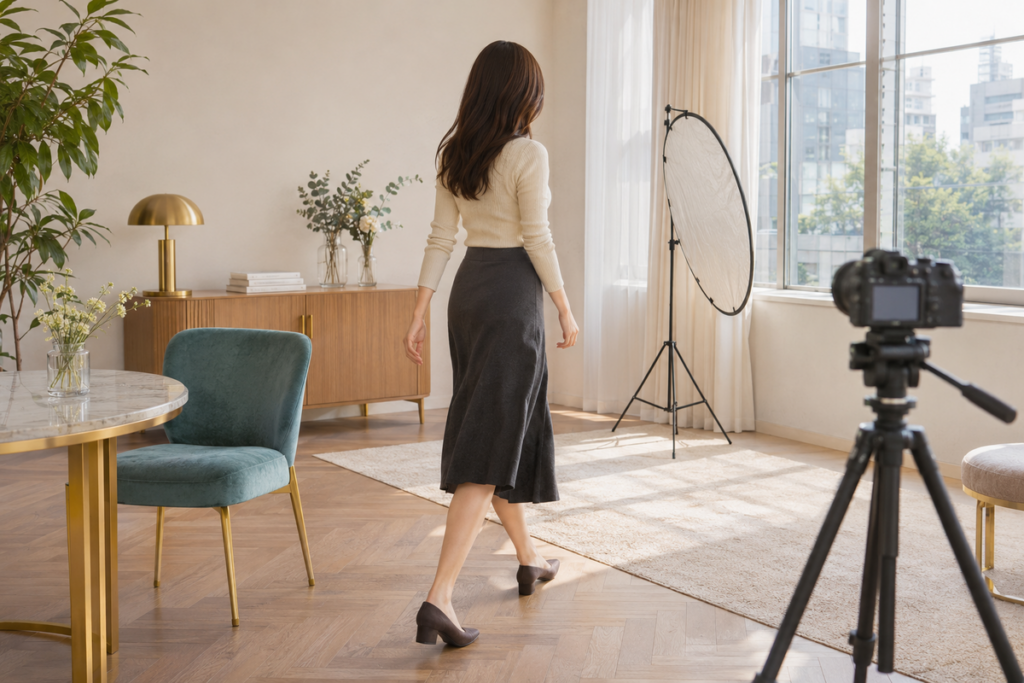
What looks effortless on those pages takes judgment in front of the lens. In an April 2022 Weekly Playboy interview, one model explained how learning a camera’s angle of view changed her posing. With a familiar photographer, she could anticipate how much of her body would be in the frame. She also learned to read the crew’s response to changing natural light and to imagine how the photographer wanted to use it.
Her account also describes a shift from striking a pose to finding an expression that fit the scene. Editors and photographers asked for a more natural response. The finished picture may suggest a quiet, spontaneous moment, while the model is actively interpreting a setting, a lens, and the people working behind it.
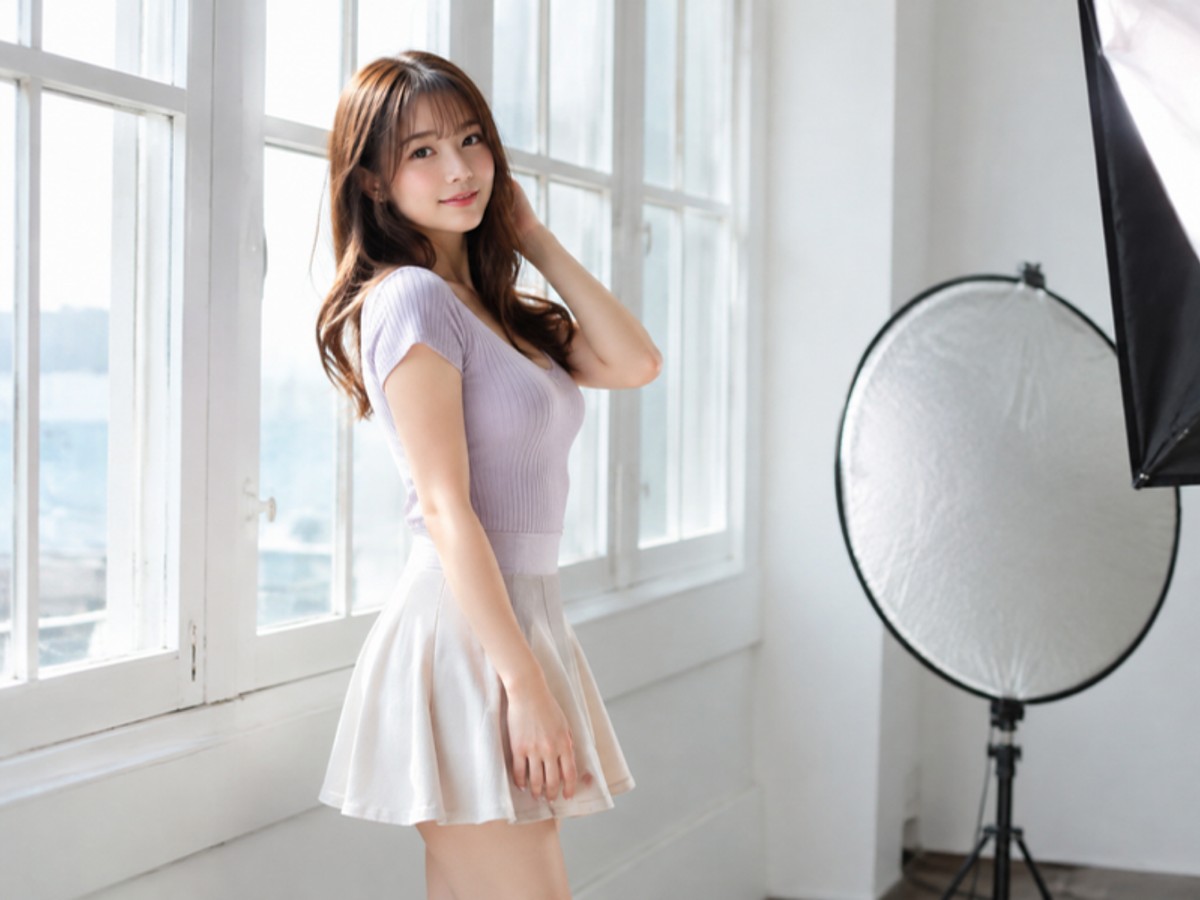
A separate example shows how much planning a book may involve. Shueisha published one performer’s 112-page first photobook in April 2022, after she moved into Young Jump gravure in late 2020. The project traveled through three regions: Kohama Island, Yakushima, and Hokkaido. In the publisher’s introduction, she described discussing clothes and locations with the staff before shooting. She wanted readers to discover unexpected sides of her through different outfits and settings.
For the model, a project like this offers room to vary expression, posture, and styling across a whole book. For the reader, the difference lies in the space given to one subject. The magazine’s brief introduction becomes a sustained photographic project, with changes of location providing opportunities for different performances in front of the lens.
Why the Job Carries a Printer’s Word
The name “gravure idol” connects this work to the pages that carry it. “Gravure” originally referred to an intaglio printing process, in which ink held in recessed areas produces the image. In Japanese, it also came to mean the photo pages in a publication. This publishing meaning is broader than swimsuit photography. It names a type of page, whatever the subject of the photographs.
Add “idol,” and the emphasis moves from a kind of page to a person known through it. The Japanese dictionary Daijisen defines the compound as someone who gained popularity by modeling for magazine photo pages, photobooks, and posters. The route to recognition is photographic. A song or a dramatic role is not needed for the photographs themselves to introduce an entertainer.
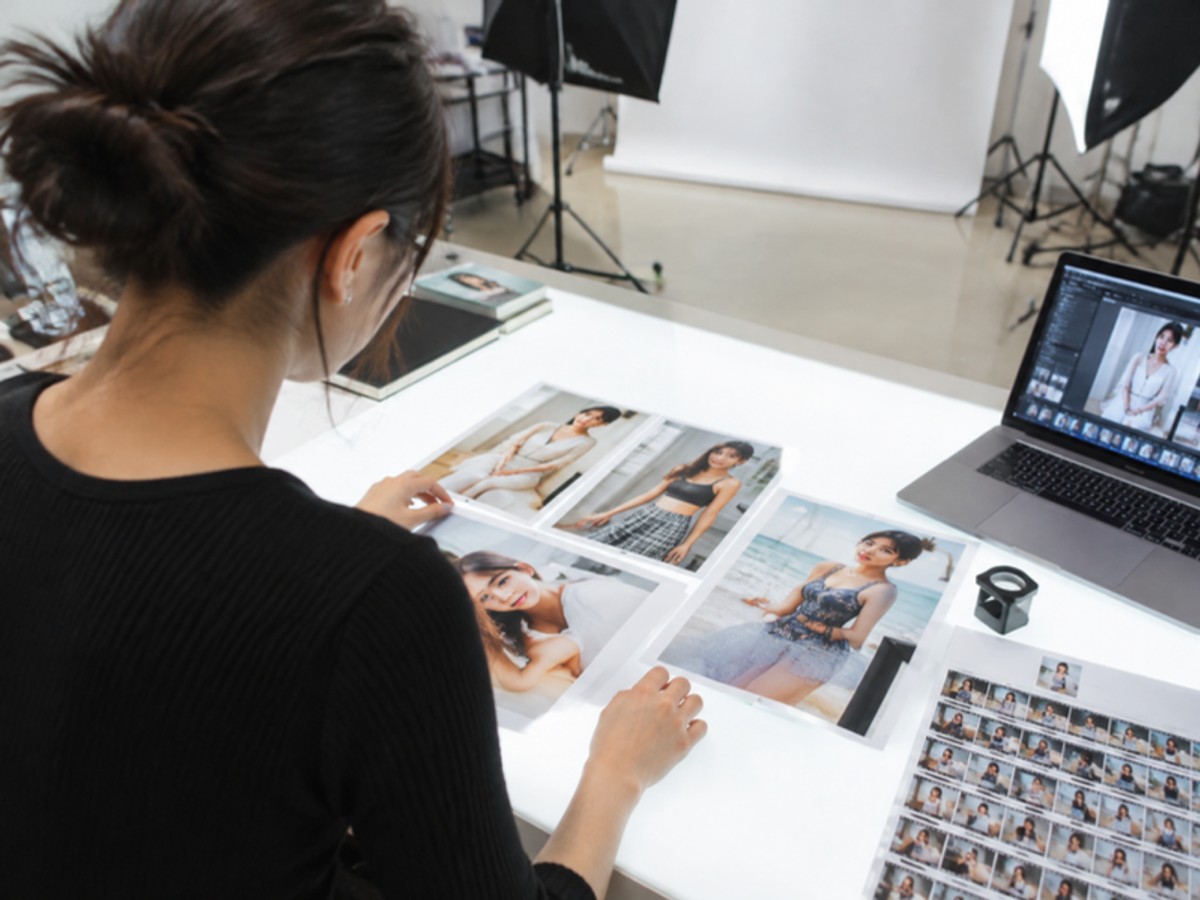
The covers also become part of a magazine’s own identity. For its 60th-anniversary exhibition in July 2026, Weekly Playboy announced a display of covers selected from six decades, alongside gravure and other magazine pages. The faces on the covers were part of how the magazine told its story. They were presented within a history that also included art and manga.
The photographic role may also sit alongside other entertainment work. The model in the camera interview spoke about gaining the confidence to try acting by learning to find expressions for gravure. That is her experience, not a career path everyone must follow. For her, finding a convincing expression for a photograph and performing a dramatic role were connected skills.
What Changes When the Pages Become a Screen?
A digital publication may extend a magazine feature rather than simply reproduce its pages. In February 2024, Shueisha released a digital-only YJ PHOTO BOOK featuring the woman from the three-region photobook. Its catalog describes a collection of additional photographs from a Young Jump feature, extending the selection seen in the magazine. A reader could move from the magazine selection to a separate collection of photographs of the same person.
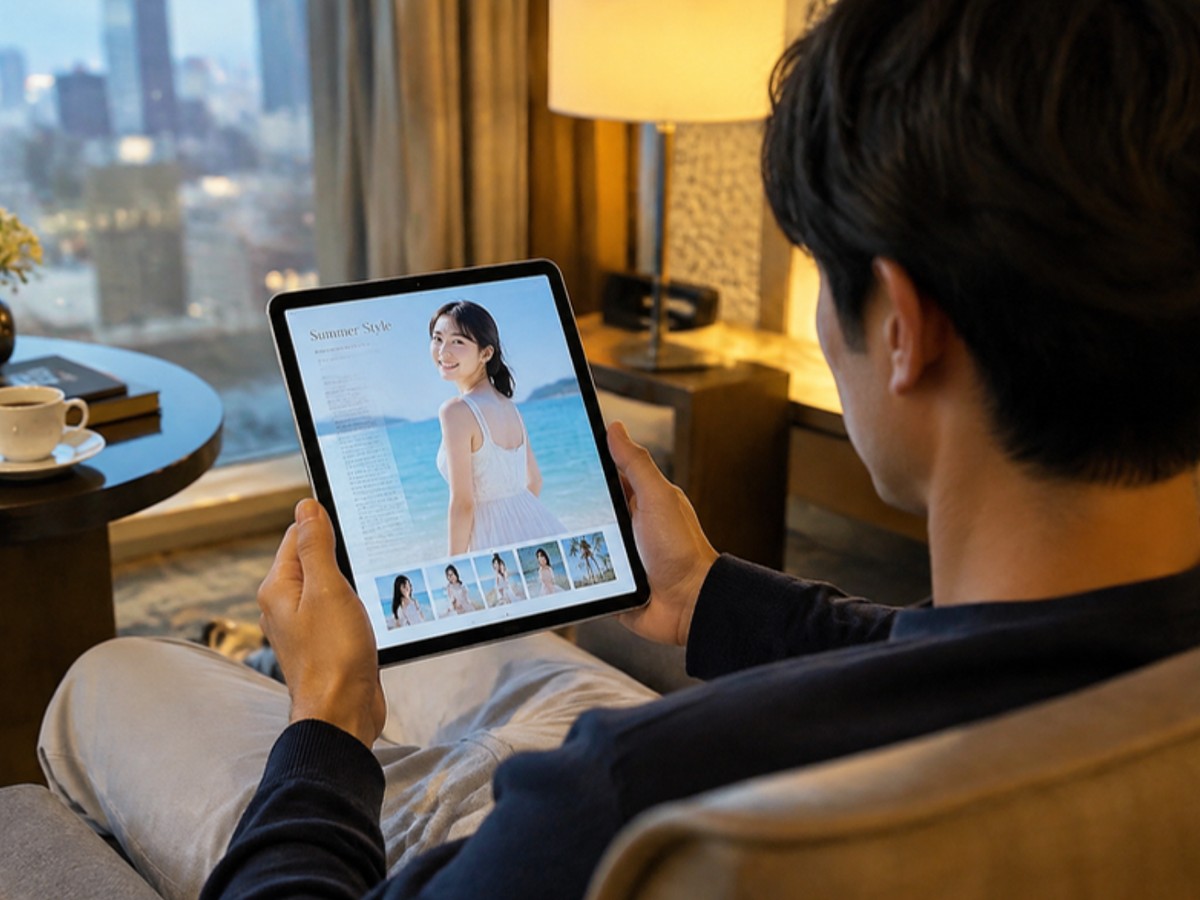
Shueisha’s Grajapa! service offers both digital photobooks and digital magazine editions. Its subscription section, +Weekly, also advertises photographs left out of the magazine and accompanying videos. A magazine shoot may therefore have several published forms: the edited feature in the issue, a separate digital collection, and material for subscribers. The model’s work reaches readers through those different selections.
The performer from the three-region photobook also appears in a separate project built around a single theme. A January 2024 members-only Weekly Playboy web feature used a goldfish theme, moving between a traditional inn and a glass-walled studio. Its public introduction describes contrasting clothes and settings, more than 120 photographs, and video. The location changes belong to one visual idea, giving the sequence a thread to follow.
That project also includes a long interview about the theme, her work as a YouTube host, and her goals, plus behind-the-scenes photographs she chose herself. A reader may move from the constructed image to the performer’s account of making it. Video adds movement and time; the interview adds a voice. The work presented here includes the posed sequence, filmed footage, and an interview about the project.
Is There an Equivalent Outside Japan?
Much of the camera work will be familiar outside Japan. Glamour and swimsuit models also work with pose, expression, and light, and audiences may become attached to the personalities in the pictures. Sports Illustrated Swimsuit’s own 60th-anniversary account describes magazine exposure helping turn models into stars. Its returning cover models make the point clearly: Photographic recognition may last well beyond one issue.
Japan’s distinctive contribution is the label and the publishing context it carries. In Young Jump, “gravure” names the photo pages within a manga magazine; in the digital catalog, it describes a collection that expands a magazine feature. Combined with “idol,” the word identifies an entertainer who becomes known through such work. “Glamour model” helps describe the photography. “Gravure idol” also shows how the photo page has become a place in entertainment culture, without requiring a singing career or even a paper page.
We are Aoyama Princess, a Tokyo adult-service business offering hotel outcall. Our official Japanese site introduces companions active in gravure, modeling, and entertainment. The magazine shoots and book projects explored here give context to that public introduction.
