



The JAV Industry Explained: History, Culture, and What Makes Japanese AV Different
JAV stands for Japanese adult video. In Japan, the shorter term AV means “adult video”: commercially produced adult entertainment on video. The word “video” is a clue to its history. Long before streaming made these productions available to viewers abroad, the business developed around a physical object: the cassette.
If you are used to adult video without image masking, mosaic is an immediate difference. In Japan’s mainstream AV industry, this masking developed within a system in which industry inspections affected both the finished image and access to stores. To understand this combination of visual rules and commercial power, it helps to start with the cassette.
When the Screen Came Home
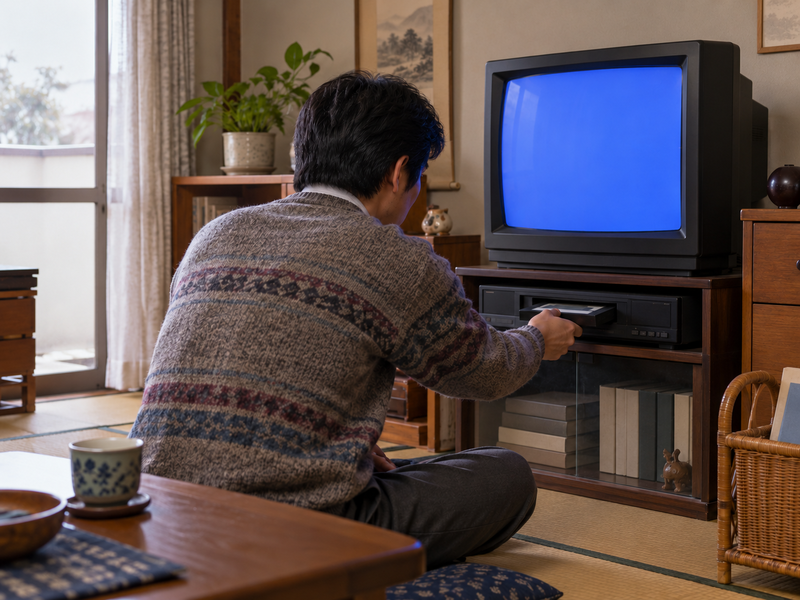
In 1976, JVC released its first VHS home video recorder. This was a milestone in home video technology, not the founding date of the JAV industry. A machine that could play cassettes brought a new possibility into the home: Viewing no longer depended on a broadcast schedule or a movie theater screening.
Japanese AV took shape as a commercial form in the early 1980s, as home video became more accessible. Cultural researchers Heung Wah Wong and Hoi-yan Yau place this development within an existing world of adult films and photo publishing. Video therefore had earlier media traditions to draw on, even as it offered a new way to reach an audience.
A cassette could be borrowed, taken home, and returned. This made the rental store an important intermediary: Owning a player did not mean owning every video. What a store could stock helped determine what its customers could watch.
How Rental Shelves Shaped the Business
Early tapes were expensive, which helped make rentals central to the business. Viewers did not need to own every title, and a single store copy could circulate among many customers. The rental shelf became an important meeting point between producers and audiences.
Yau and Wong describe a concrete example of this power. Biderin, the Nihon Ethics of Video Association, inspected videos before release. In the rental system they studied, stores that stocked videos outside its approval system risked losing access to popular titles supplied by its members. A decision about acceptable imagery could therefore affect what a store could stock.
In the mid-1990s, Medirin, the Media Ethics Association, offered a competing inspection route for independent studios and videos intended for sale. This gave producers an alternative to the established rental network. Buying and renting were not simply two ways of getting the same product; each was associated with a competing system for approving and distributing it.

From a Cassette to a Connection
Internet distribution was already emerging in the late 1990s. According to a 2018 account by a member of its development team, DMM’s video service began in 1998. The account traces its expansion from computers to mobile phones, smartphones, televisions, game consoles, and virtual reality. This is one company’s timeline, not a single date when the entire industry moved online.
Getting a video no longer required picking up and returning a rental copy. Videos could be delivered over a network to a compatible device. The word “video” survived this change, carrying a cassette-era name into an industry that also distributes through internet-connected screens.
Why Mosaic Is Part of the Picture
Mosaic is pixelated masking used to obscure parts of an image. In Japanese AV, obscenity regulations led industry bodies to screen productions and require changes to the imagery. This helps explain why an adult-only production could still contain masking: Being made for adults did not settle the question of which images could be distributed.
The differences between the inspection bodies were visible on screen. Yau and Wong describe Medirin as permitting thinner mosaic than Biderin. Producers were choosing between routes with different image standards as well as different outlets. Mosaic was therefore part of a commercial struggle over how videos could look and where they could be distributed, not a fixed stylistic convention.

These were industry inspection decisions, not blanket government approval. An inspection mark or the presence of mosaic alone does not determine a production’s legal status.
What Makes Japanese AV Distinctive?
For viewers used to unmasked adult video, the clearest contrast is that mainstream Japanese AV has treated masking parts of the image as compatible with adult entertainment. Its history also shows a close connection between what an inspection body approved and the commercial network a producer could access. The rental and retail examples explain this connection without treating every Japanese production as the same.
This is a comparison of masking practices and the historical organization of distribution. It does not mean that all films made outside Japan are unmasked, or that Japan alone has regulations. Nor does it suggest a single Japanese taste in stories or performers.
Reception abroad has its own context. Wong and Yau’s research in Taiwan examines how Japanese videos became part of both men’s and women’s sexual cultures there. That is a study of a particular audience and society, not evidence of a universal preference overseas.
Seen in this light, JAV is a cultural product shaped by technology, business relationships, and decisions about images. What appears on screen reflects these production choices; it is not a direct depiction of everyday life in Japan or of any individual’s private wishes.

JAV Escorts in Tokyo: Can You Really Meet an AV Actress, and How Does Booking Work? | Aoyama Princess
Searching for a “JAV escort” in Tokyo may bring a very specific picture to mind: finding an actress you have seen on screen, asking for her by name, and arrangi...
About Aoyama Princess
We are Aoyama Princess, an adult-service business based in Tokyo.
